

There is a particular quality of light in the Yala scrubland in the twenty minutes after first light, not the golden light of travel photography, but something greyer and more uncertain, the world not yet given over to the day. In that window, if you are in a jeep and quiet, the park belongs to the animals.
This is why the dawn safari exists. Not as a marketing convenience (the 5 a.m. departure time is genuinely inconvenient, and the staff who wake before it are not paid extra for the romance of it) but because the animals’ world and the visitors’ world overlap most honestly in that hour.
Why the animals come
Yala National Park occupies the dry zone of Sri Lanka’s southern coast. In the dry season, from roughly February through July, the park’s interior tanks (the old irrigation reservoirs built by ancient Sinhala kings that now serve as year-round waterholes) are among the only reliable water sources across the landscape. Leopards, elephants, sloth bears, crocodiles floating like logs at the margin: all of them move toward water during the coolest hours, which in Yala means the period between first light and about eight in the morning.
By nine, the sun has climbed past gentleness. The scrub, which in the early morning carries a particular fragrance (dry grass, elephant dung, something floral) becomes simply hot. The larger animals retreat to cover. The jeeps multiply. The dust rises.
The math is simple: if you want to be there when the animals are at the water, you have to be there when the gates open.
The first vehicles in
There is a second reason dawn matters, and it is more specific to leopards than to any other animal in the park. Being among the first few jeeps through the gate means seeing Yala in a condition that barely survives past mid-morning: the park under mist, tracks unmarked by the day’s traffic, nothing yet disturbed by the sound or dust of other vehicles. The gates closed at six the previous evening, which means that for roughly twelve hours the park has had no vehicles in it at all. The trackers have a saying for it: “The forest returns to its natural state, as it once were, before our ancestors walked these lands.”
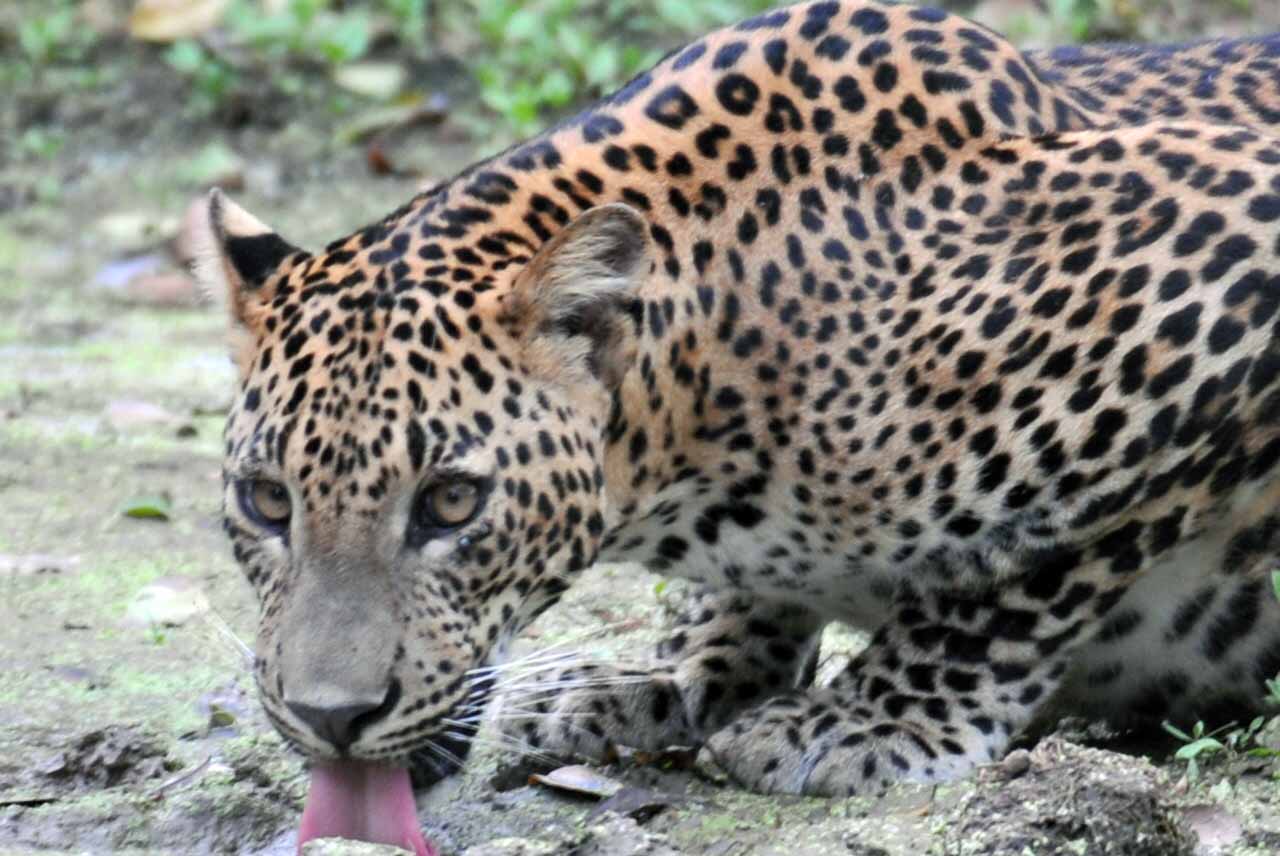
Leopards notice this. They use the roads more freely in that quiet window than they will an hour later, once a dozen jeeps have gone up and down the same track. This is the hour when you are most likely to see a leopard doing something it will not do again until the following dawn: walking down the middle of a track in the open, or asleep on the packed earth of the road itself, because for those few minutes it is not the road of a national park, it is just the ground.
That window rarely survives past nine. The roads belong to the vehicles again, and the leopards have gone back to using them the way they use everything else in the park when people are present: carefully, and mostly out of sight.
What the trackers know
The trackers who lead these drives did not learn the park from a briefing. Which waterhole draws the animals in which month, which stretch of track a leopard favours after rain, what a spotted deer’s alarm call says about what is moving unseen in the scrub: knowledge of this kind is only acquired over seasons, one morning at a time.
A leopard at a waterhole at 6 a.m. is not performing. It came because it was thirsty.
The discomfort is part of it
Waking at 4:30 is not comfortable. Neither is the open jeep through country that is still cold and dark enough to need a layer. The tea handed to you before departure matters more than tea at any other hour.
But these conditions are also what create the silence inside the jeep. Conversation stops not because the guides instruct it but because something in the quality of the morning (the sound of ground hornbills calling somewhere out of sight, the egrets white against the dark treeline, the possibility of what might be standing at the waterhole around the next bend) asks for it.
This is not the silence of reverence, exactly. It is the silence of attention. The distinction matters.
The one hour that holds the rest
Most guests at Arana take at least one morning drive. Almost all of them report the same thing afterward: that the rest of the day organises itself around what they saw, or didn’t see, in those first hours. A leopard spotted drinking at a tank at 6:15 is still being talked about over dinner. An elephant with a young calf moving through the scrub at the park’s edge becomes the sentence that begins the story of the trip.
The afternoon drives have their own character: the golden hour, the slower pace, the different birds. But it is the dawn hour that lodges.
The animals are at water before the sun is. If you want to stand at that edge, you have to be willing to arrive before the light.
We leave at five.